White out

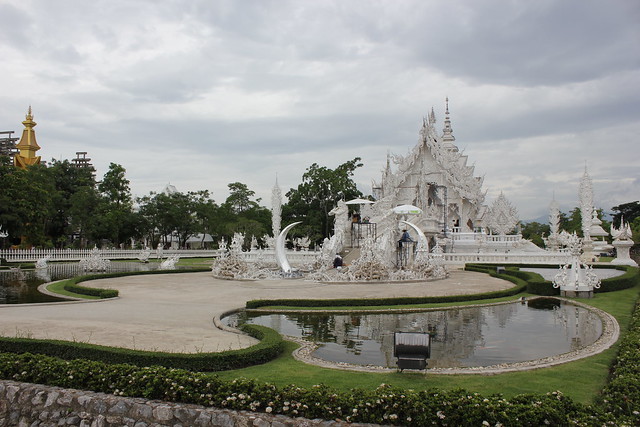
The White Temple near Chiang Rai, northern Thailand.

Mystery

The 2500 year old carved stone jars in the Plain of Jars near Phonsavan, Laos. The purpose of the jars is not known.

Early to rise

Sunrise at Angkor Wat, Cambodia.

Landmark

Sigiriya rock at sunset, Sri Lanka.

Hidden gem

A juvenile Asian elephant feeds on vegetation in northern Thailand.

July 10, 2012

Forty-eight hours in Vang Vieng

Curiosity got the better of me when I booked a ticket to Vang Vieng.

I'd heard plenty of stories about the place about three hours north of the Laos capital Vientiane - a place of excessive drug taking and drinking; bar hopping while floating along a river in an inflatable tube. Stories about people dying or getting seriously injured.

I told myself I'd stay away. It wouldn't be my scene, I thought to myself.

I was right.

Getting on the local bus, I was hoping to find other travellers to talk with or at least be with when we were scheduled to arrive  in Vang Vieng about 12.30am. I was out of luck. The bus, as the name suggests, was full of locals and none, it turned out were getting off at Vang Vieng. Though I didn't see why any of them would. The town, in recent years anyway, has been overrun by westerners seeking the seemingly simple thrill of floating down the river while drunk.

Every seat in the bus was more than full (folding chairs and stools were placed in the aisle for a few extra seats, but more on this in another post) and from what I gathered, everyone was heading to Vientiane. When I told the young woman sitting next to me I was heading to Vang Vieng her face was a mix of surprise and shock as if to say "why on earth would you want to go there?"  

What I found in Vang Vieng was a lesson in youthful excess which made me feel much older than my 23 years. (I'm really an old man at heart.)

In the morning and into the early afternoon people sat in restaurants with low wooden platforms and small tables and pillows which were playing either back-to-back episodes of Friends or Family Guy. Many, I imagine, were nursing cuts, bruises and hangovers while drinking fruit shakes and eating food.

It seems to be a town which can keep people in its grip and keep them in a vicious cycle of tubing during the day, drinking at night, nursing the hangover then doing it all again.

One of the girls we met had been in town for three weeks. She was working for one of the local bars which ply free buckets of alcohol and mixers to travellers by directing foot traffic to it. She was paid in alcohol and food and took care of her own accommodation.

There is more to do in this town though and you don't have to look far. Kayaking, rock climbing, trekking. I set my sights on a kayaking, tubing and caving day trip which inadvertently gave me a feel for what the drunk tubing experience would be like. Albeit at different times of the day. The tubing was 350 metres through a cave. Headlamps lighting the way, we entered the cave through a small gap between water and cave roof and we pulled ourselves along a rope to as far as we could go. I felt like an undercover agent on a mission to blow something up. Doing this was more dangerous during the rainy season, our guide Mr Sing told us. Mostly because of flash floods which could increase the river levels at a moments notice.      

During the kayaking leg, we stopped at one of the riverside bars which tubers can stop at. One of the workers throws a full water bottle tied to a rope to pull in those wanting to take a break from the river. We, however, pull up on the side of the bank and climb up the stairs. The bar has a good crowd of people and also a trapeze swing over the river for patrons to jump in. One of the staff, an older, balding Laos man, pulled the swing in  using a rope while another threw a semi-inflated rubber ring to pull in each jumper.

The bars themselves, about 6 in total, are semi-permanent structures made of wood and built along the banks of the river. Each has a different vibe or thing to do. The bar we stopped at had a beer pong table, a basketball hoop and was covered in different coloured spraypaint. Another bar we kayaked past looks closed, but had a giant metal water slide which would launch the person into the river.

For some this will be the last high they will ever experience. Estimates on the casualty rate each year from tubing varies, but travellers do die or are seriously injured while tubing.

During the rainy season the river levels are high enough that revellers can jump and dive without hitting the rocks below the surface. But this day I still saw rocks and debris rise up above the water and act as a reminder of what is lurking under the river's murky, fast flowing, surface. The problem comes during the dry season when river levels are lower. That and the combination of a sense of drunken invincibility and sometimes an overestimation of swimming ability (A drunk tuber had told a friend he did not know how to swim).

Perhaps this pessimistic view comes from my own realistic estimation of swimming abilities and a healthy respect for any natural body of water.

Despite all this though, I can see the appeal for some people and the reason so many young (though not exclusively) travellers make the pilgrimage to Vang Vieng. If I were a few years younger and was in the right state of mind I'd probably give it a shot and have a great time, too.

Such are the perils of being an old man at heart.


June 30, 2012

The first step

Yesterday marked a small milestone in a larger goal to become a travel writer. Its probably a goal that many writers/ journalists want to achieve - to be paid to travel. Either that or being a war correspondent. Neither of which I imagine are easily achievable, especially in the formative years of a journalism career.

Anyway, if you haven't seen it already, here's a link to the travel piece I wrote about Sa Pa, northern Vietnam. Its more or less the same as the one that was in the Marlborough Express a few weeks ago.

http://www.thephuketnews.com/in-search-of-serenity-31719.php

June 29, 2012

A lesson in compromise

Travelling alone is great. Unburdened by compromise; the master of your own destiny. Go wherever you want, whenever you want.

Travelling with others requires a different mindset. What do they want to do? What can I give up doing? What is the general consensus within the group? The benefits of travelling with others as opposed to going lone wolf are obvious. Camaraderie, conversation, cheaper prices.

There are two main subsets of groups travelling together, which can be further subcategorised in terms of the dynamics of the group (which I don't want get into right now). The first are groups of friends travelling together for their entire trip. The other are "lone wolf" travellers coming together to travel for an indeterminate period of time - mostly for convenience and the reasons mentioned above. Most of the time I am the latter.

An unwritten, unspoken agreement seems to exist among solo travellers that you will travel together until it no longer becomes either financially viable or if your plans change. Or, *gasp*, if you get sick of the people you're travelling with.

I've been travelling with a girl I'd met at a hostel in Chiang Mai, in northern Thailand, who had vague plans to travel to Laos just as I did. I seemed to have a more solid plan - go a bit further north to Chiang Rai then spend two days cruising down the Mekong River from Thailand to Luang Prabang, Laos. At this time I'd decided to leave two English girls I had been with because they wanted to go to Laos and I wanted to head to Chiang Rai first, but that's another story. She had asked if she could come with me to Chiang Rai seeing as she was just kicking about Chiang Mai not doing much. I agreed and we've been with each other ever since (about a week now). Everything was going fine - both of us seemed to have a similar mindset when it came to travelling - accommodation-wise anyway (cheapish places which mean more money can be spent on other things. All you need is a bed to sleep in and wifi). Then we met another girl on the second day of the slow boat trip. She was taking the long way back to Scotland after spending 18 months living in Australia.

The three of us then entered this unspoken, unwritten agreement that we would be together until it was no longer practical. (She has since gone south to Vang Vieng whereas we are heading north into the jungle). Things were going grand until we hit dry land again. Where to stay?

Suddenly we needed a place with three beds, but we each had different criteria and ways of finding it. Normally the way I travel, especially when arriving late afternoon or evening, is to pretty much find the first place with a decent rate to spend the night and sort myself out for the next day. What to do and whether to move on to another place etc. Either that or book a few nights in advance online then figure out a plan from there. Our Scottish friend was using an app to find cheap hotels to stay in and paying that little bit extra for a fancier place. For me that money would be better spent on food or for tours or souvenirs.

After wandering around Luang Prabang (which thankfully is not that big) in the early evening with all or luggage we finally settled on a place - three beds, a big room, a cheap price between three. A little bit run down, but bearable. That was not the last I heard about how we could probably get a good hotel for a few dollars more.

This probably wasn't the first time I'd realised other people travel in different ways and have different criteria for what they want to get out of travelling etc. But it was an example that made me want to write about it (obviously).

It also got me thinking about what kind of person I'm like to travel with. Of course I'll never know, but I'd like to think I'm not too bad.

The main factor for me in anything is price. If its out of my price range or if I think it costs more than it should I'll say so. I'd also be more likely skip it or find an alternative or - if I really want to do it then I'll try save money in other places (food etc).

I get a bit irritable when I'm tired and/ or hungry and sometimes have to fight the urge to snap at people. When in a group I tend to be a contributor rather than the leader in a conversation or in decision making. But I'm more likely to go with what others want to do to save time, frustration and to make the decision making process quicker.

I sound like a great travelling partner, right? 

Though, to be fair, I've been lucky enough to have been with people who more or less want to do the same things as I do.

Or are they just compromising with me?    

https://www.facebook.com/media/set/?set=a.10151897461150204.881301.830635203&type=1&l=d34c5c93b2

June 20, 2012

Of Animals and Trekking

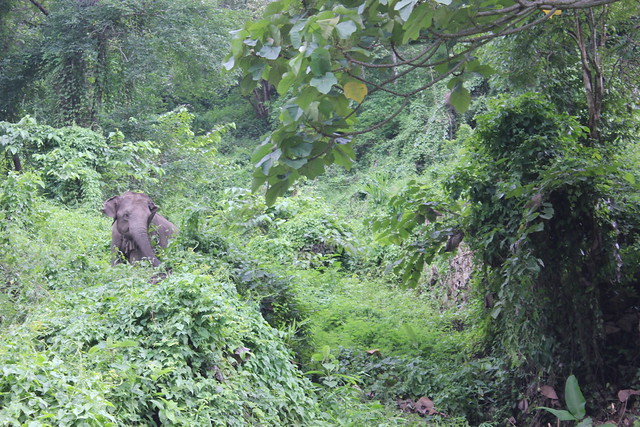
Lunchtime: A baby elephant feeds on vegetation in northern Thailand
     

The sound of a bell in the middle of the northern Thailand jungle stopped me in my tracks. Above me on a hill to my left, a cherub-faced Asian elephant stood grazing on overgrown vegetation. Its probably the closest I'll come to seeing an elephant in the wild - this one that we've seen at the start of our two-day trek belongs to an elephant camp nearby. Elephant trainers, or mahouts, teach them commands which years ago would have been used to put the elephants to work in the jungle (possibly still the case) though more likely now for trekking with travellers.

The trek takes us 12 kilometres, mostly uphill, through jungle, over streams and through sticky rice fields (not that the rice fields themselves are sticky - its the kind of rice they grow) to Lahu Village where we spend the night on a mountain by candle light and mosquito net. It was different to my Sa Pa experience in northern Vietnam. Firstly, it rained almost all of the first day leaving the 12 of us and our guide Eddy soaked right through. Even my change of clothes which were in my backpack is slightly wet. The jungle setting also means mosquitoes. Lots of mosquitoes.

I'm growing quite fond of trekking. Something about getting away from the city, seeing and feeling more of the countryside, a better appreciation of the simple dinner at the end and feeling like you've earned it.

The start of the trek (a package deal), however, was a case of having to endure before getting to the good stuff. I don't think we hit the track until after midday (we were picked up about 9.30). The first stop was an Orchid farm - nice enough, but flowers don't tend to get me too excited. The next two, a snake farm/ show and a long neck village, seem depressing and exploitative. The snake trainers knew what they were doing, but seemed to show little respect for the reptiles. One put the head of a snake in his mouth and the other trainers seeming flippant and were unnecessarily aggravating the snakes. It was not a place I would have gone to of my own free will.

The village seemed like it was set up for tourists with the women, who lengthen their necks and legs using gold bangles, selling woven knick-knacks like a sideshow attraction. I felt bad even having my camera out. It may have been better if, as travellers, we had one of the women explain why they do what they do instead of being dropped off and being told we had 20 minutes to walk around.

Woah, this is getting negative. And long. Let's move on.


One of the better experiences in Chiang Mai was ziplining through the jungle with Gibbons. Surprisingly, or maybe not so, the company (Flight of the Gibbons) was set up by a Kiwi company. And it kind of showed - the whole trip from pick-up to drop off seemed like a pretty slick operation. Our guides, Mr Cash and Mr Good, were a pair of jokers trying to mess with our group at each platform - holding us back when we were ready to fly through the jungle canopy, pretending they'd forgotten something - but there was still an inherent level of trust in them. Mr Cash had been with the company since a few months after it opened about five years ago. Before that he'd worked at a hotel and applied for the job when he saw a listing in the paper. 


After a good 2 and a half hours of flying through the trees (which also included a sighting of a Gibbon family - mum, dad and son) we were dropped off at a nearby waterfall and then a hearty lunch before being taken back to our respective hostels. The trip also came with a free ticket to the zoo and a bandana. Score.


The Chiang Mai zoo itself was big - big enough to warrant a monorail and an open-sided tour bus - I won't go into much detail because you've been to a zoo before. But I didn't imagine the first time I'd see a koala would be in Thailand.


Right, this is getting too long and uninteresting for my liking so I'm calling it quits on this post. 


https://www.facebook.com/media/set/?set=a.10151866177160204.877527.830635203&type=1&l=79a2af2c21
     

June 13, 2012

Travelling pays (an update)

Apologies to some (you know who you are) for the no blog entries lately. But after my trip to Sa Pa in northern Vietnam I felt compelled to write something for my old paper back home. My first paid gig as a travel writer (Hoorah). There's also another paper which will be running the piece (which I'm not being paid for). I didn't want to publish it here before it got printed because there's some kind of etiquette around that, I guess. Maybe its just politeness and courtesy.

I also didn't want to write a completely different piece about Sa Pa, because well, I'm a little lazy like that. And I haven't done anything worth blogging about.

Here's a link to the story and to the photos.

Since Sa Pa, the friend I was travelling with went back to NZ and I spent a week in Hanoi not doing much. I had a flight out on June 11, he left on June 2. Half of that time was pretty frustrating because felt like I was in limbo, just waiting to move onto the next place. A problem with haphazard booking of things.

I re-met some people from our first night in Hanoi and also another who I mentioned in a previous blog post who we'd met all the way up Vietnam.

I'm now in Chiang Mai after a domestic flight (Hanoi to Siagon), an international flight (Saigon to Bangkok), three train changes to get to station where I caught a 17-hour train trip to Chiang Mai.

Short and sweet and keeps people off my back for a while. Ha.


May 27, 2012

No such thing as goodbye


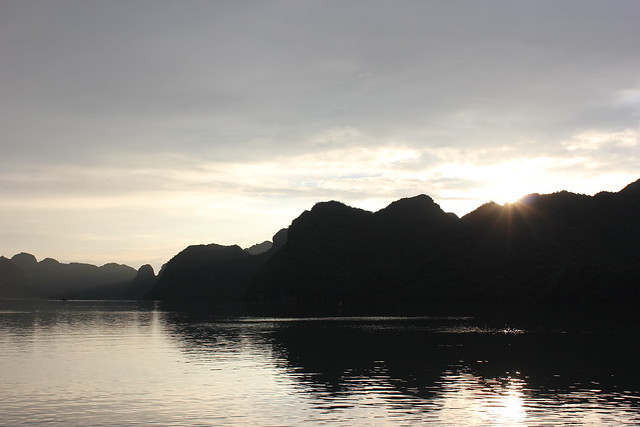
Sunset in Ha Long Bay, Vietnam


Maybe its because there’s only one main route through Vietnam. Perhaps its because it’s the low season for tourists. Or it could be both, but during this discovery of Vietnam it seems inevitable that you cross paths with people multiple times in different cities and on different tours without knowing each other would be on it.

It began at the start of our Vietnam odyssey on a tour of the Cu Chi Tunnels near Ho Chi Minh City. Five strangers (among others) got on the bus and exchanged pleasantries as travellers do.

“Hi, how are you going? What’s your name and where are you from? How long have you been in Vietnam and what have you done so far? What are your plans?”

You start chatting through the day and you get along fine, knowing that, if their plans aren’t necessarily the same as yours you might not see them again.

The tour ends and everyone goes their separate ways.

Until the next night. 

A Dutch girl from the tour and a friend of hers get on a night bus a friend and I were on as we headed to our second stop Nha Trang. Small world.

They’re heading to Mu Nei which is only a few hours from Ho Chi Minh and well before our stop. Again we say goodbye and joke that we’ll probably see them again somewhere.

In Hoi An we see an Australian guy who was also on that Cu Chi tunnel tour. We didn’t really get talking to him and his English girlfriend on the bus, but we acknowledged each other when exchanged glances again. We find out later too that our Dutch friend saw me and my friend on a scooter in Hoi An.

In Hue, we met again when our Dutch friend and her travelling buddy were staying at a hotel across the allyway from us. The hotels themselves were down a long alley which, as a traveller you would be hesitant to go down if you didn’t know what was down there.

And now here we are, the six of us on a two day, one night trip in Ha Long Bay. No planning involved, just a bit of luck (there are a lot of different tour groups which go out into the bay every day) and a growing realisation of the inevitable re-connection with other backpackers.

In Vietnam there really is one well-trodden path which is quite linear (because the country itself is not very wide) and travellers are either heading south or going north. Each trip either starts in Ho Chi Minh City or Hanoi with major stops in Hue, Hoi An, Nha Trang, Mu Nei and Dalat – and each of these places only have a couple of different tours the surrounding areas.

It’s a good feeling meeting people you’re already familiar with because you’ve already dealt with all the formalities of the first meeting and you can just get down to enjoying yourselves.


The Ha Long Bay tour itself is a bit hit and miss. It looks like Milford Sound or the Marlborough Sounds, but dirtier. Firstly, the rain is not ideal, but it does bring the temperature down. Most of the morning is also taken up with the 3 -4 hour trip from Hanoi to Ha Long Bay itself and you don’t actually get on the boat until about 1pm. 


The first stop at the Heaven Cave is impressive at first – a wide expanse of stalagmites and stalactites which were discovered by a group of fisherman in 1993 – but the coloured lights which illuminate the rock features give the place a set-like, unnatural and man-made feel. The second stop – kayaking around Ha Long Bay has been the highlight so far though. Getting up close to the large rock formations jutting out of the water makes you feel so small and insignificant as they tower above you. If those rocks could talk they would have amazing stories to tell about Vietnam’s history. 


The night is deathly still. Only the distant chugging of a nearby boat, karaoke and the bark of a few dogs pierce the silence. 


No moon and the stars are concealed by cloud. A cool breeze - possibly cool enough for a light jacket.


The towering islands now towering silhouettes and only the lights from neighbouring boats cut through the darkness. 


A restful sleep in a small cabin shared with small cockroaches later and morning has broken. A meager breakfast of bread, butter and jam and we're spending the rest of the day slowly making our way back to Hanoi (by boat and bus).


And there we are. Standing on a busy Hanoi street corner. The goodbyes are fleeting. We know we'll probably see each other again.


Its just a matter of when and where.    

May 25, 2012

The faces of Vietnam


Most countries have that quintessential image that when you see it you can't help but think "yeah, that's definitely x country - it can't be anywhere else".

It could be a landmark - the Eiffel Tower - a festival - Carnaval - something which you associate with a particular country without even thinking.

After 10 days in Vietnam I don't think I've found that image or had that moment where I've thought - "Yeah, this is Vietnam". A quick google image search brings up maps of Vietnam, photos from the Vietnam war and Ha Long Bay (somewhere I haven't been yet.)

I think mostly because all the places we've been so far (Ho Ch Minh City/ Saigon, Nha Trang, Hoi An, Hue) have been so diverse and different there hasn't really been a constant. And most things which you might consider could be Vietnamese - the conical hats, street vendors, insane traffic - can also be attributed to other Asian countries.

Ho Chi Minh City is built up rather unevenly with high-rises near strips of small shops, markets and food vendors. The roads are clogged with motorbikes which in turn clog your airways with exhaust fumes and your ears with the excessive honking of horns. Its a city that definitely has life to it in a frenetic and hectic kind of way. A 24/7 sensory overload.

Head northeast to Nha Trang and things slow down a bit. You find a tropical white sand beach with water so clear you can see the grooves in the sand beneath your feet. At 6am its warm enough to go for the first swim of the day. (As soon as we got off the sleeper bus the feeling of wanting to jump right in was only marginally outweighed by the thought we should probably check in somewhere so we can leave our things.) Its a fancy resort town sitting amongst a city of high-rises. The traffic is less and so is the feeling you need to be somewhere in a hurry. This has holiday destination written all over it - if you're into that kind of thing.

Further north in Hoi An is something which resembles a sleepy seaside town with old, yellow buildings with wooden shutters and a lot of character down by the riverside. There are remnants of its history still about - the old Japanese bridge and some houses which have been preserved as a reminder of years gone by. The streets are lined with tailors, restaurants and art galleries. Life indeed seems to go slower the further north you go.

Hue is the home of an imperial city surrounded by high walls, a moat and a relatively expensive entrance fee (80,000VND = $5NZD). No longer used in its official capacity as well, an imperial city, it has become one of the major tourist attractions in the city - aside from the tombs of some dudes which is kind of creepy. The buildings within the walls which survived the bombings during the Vietnam War have been preserved and repaired while others have been left as they stood after being reduced to rubble. The citadel sits on the other side of the Perfume River from the rest of the city and is linked by two bridges. The rest of the city is largely nondescript with no obvious landmarks and seemingly thin on street food vendors compared to other cities.

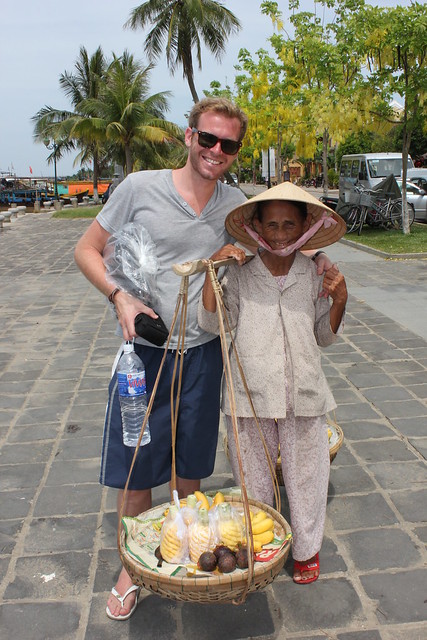
I suppose amongst all that the constant seems to be the people. Persistent (most will try their hardest to make you buy something and won't take your first "no" as an answer) and content enough with their lot despite the obvious devastation of the Vietnam War just 40 years ago. Though in the faces and voices of some street vendors selling bracelets, sunglasses, fruit and cigarettes (among other things), there is an air of desperation - that if they drop their prices too much or don't sell enough they may not be able to feed themselves or their family that night.

Like any country which has witnessed firsthand the worst of human depravity there are reminders everywhere in the form of museums, ruins and scars on the land and people.

Describing Vietnam and its culture is complicated - there seem to be regional differences in food and attitudes and influences taken from its past including french style bagguettes (which you can buy filled with various meats, vegetables and sauces from street stalls) and bakeries from during the French occupation. It also still uses the US Dollar as well as the Vietnamese Dong - a remnant from the Vietnam War. Its food is also very similar to that of the rest of Asia - rice, noodles, steamed buns and even some desserts which I myself are familiar with from growing up around part of the Chinese culture. I'm not sure which country influenced which in this respect, though.

So Vietnam really seems like a country which has taken the best of parts of its chequered history and mashed it together to create its own unique character within South East Asia.

Twitter Delicious Facebook Digg Stumbleupon Favorites More